Law No. 13 of 2013 replaced the earlier Law No. 15 of 1979 and now governs real estate registration in Bahrain.
It covers how land survey and registration operations are organized, and it sets out the related fees and procedures. The law also works to document property ownership accurately and gives owners and investors legal protection.
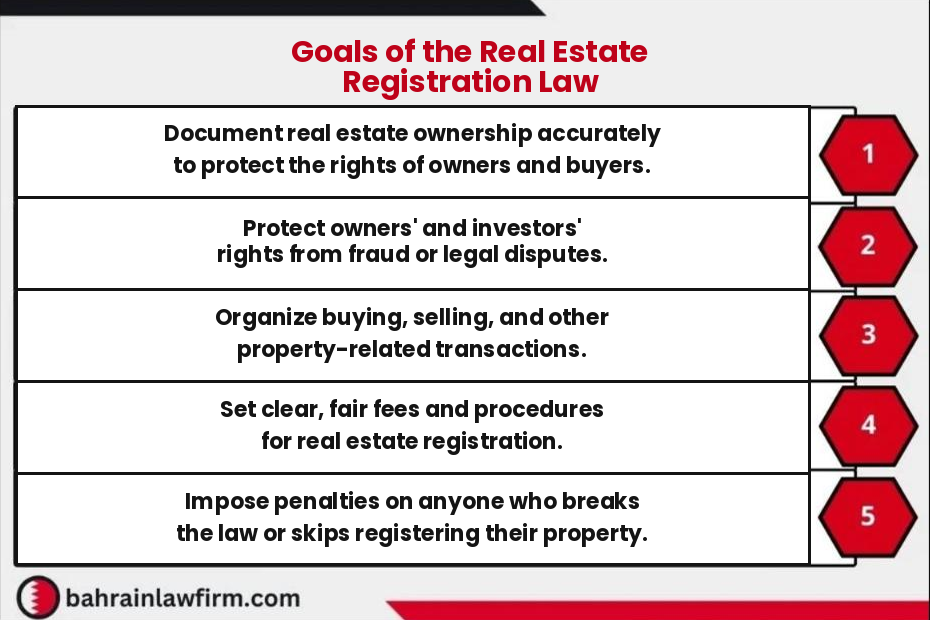
Goals of the Real Estate Registration Law
The law aims to:
- Document real estate ownership accurately to protect the rights of owners and buyers.
- Protect owners’ and investors’ rights from fraud or legal disputes.
- Organize the buying, selling, and other transactions tied to real estate.
- Set clear, fair fees and procedures for real estate registration.
- Penalize anyone who breaks the law or skips registering their property.
Bahrain Real Estate Registration Law stands as one of the key pillars for organizing and documenting property ownership, and it keeps the rights of owners and investors protected.
This law aims to bring transparency and security to real estate dealings. It lays out a legal framework that sets the procedures and fees tied to registering property, and it imposes penalties on anyone who breaks the rules.
The law sets out the fees tied to registering property. Here are the main ones:
| Transaction Type |
Fee |
| Registering a sale contract |
2% of the property’s value (15% discount if registered within 60 days of the sale) |
| Registering an exchange contract |
2% of the higher-valued property, split equally between both parties |
| Registering a gift deed |
Varies based on the type of gift and the property’s value |
For the full fee details, check Article 50 of the law.
Registering a property involves the following steps:
- Submit the application: File your application with the Survey and Land Registration Bureau, along with the required documents.
- Verification: The relevant department checks that the submitted data and documents are accurate.
- Registration and issuing the deed: Once verified, the property gets registered and the final ownership deed gets issued.
- Notifying the relevant authorities: A copy of the deed goes out to the relevant authorities so they can update their records.
Not complying with the registration law can bring financial fines and legal penalties, including:
- Fines for anyone who doesn’t register their property within the set period.
- Unregistered property transactions becoming void.
- Legal liability for submitting forged documents or false information.
Hiring a lawyer in Bahrain who specializes in real estate registration is essential if you want things to run smoothly and your rights to stay protected. A lawyer can help with:
- Giving legal advice before you register the property.
- Reviewing contracts to make sure they comply with the law.
- Representing the client before the relevant authorities to complete registration.
- Filing appeals if there are errors in the property records.
No schema found.
Bahrain Real Estate Registration Law stands as an essential tool for documenting property ownership and protecting the rights of owners and investors.
Sticking to the procedures and fees the law sets out keeps real estate transactions running smoothly and securely. We recommend hiring a specialized lawyer so you can register your property without running into legal trouble.