This article explains the legal framework governing promissory notes in Bahrain, including the information required for validity, the obligations of the maker and beneficiary, procedures for claiming payment in the event of default, and the importance of complying with statutory deadlines.
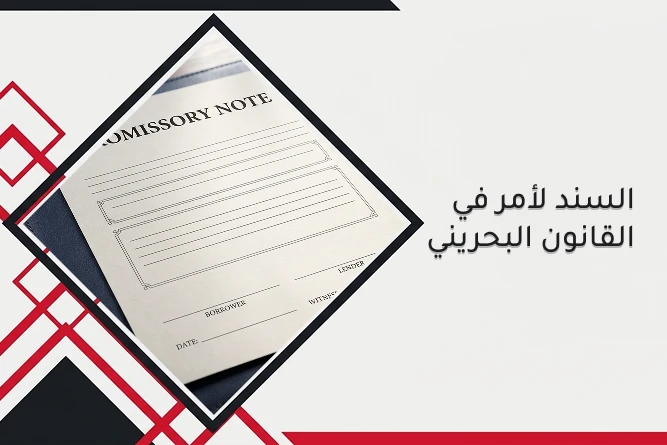
Promissory Notes under Bahraini Law
Table of Content
A promissory note is a commercial instrument through which a person, known as the maker, undertakes to pay a specified amount of money to another person, known as the beneficiary, either on a particular date or upon presentation, in accordance with the statutory requirements.
The Bahraini Commercial Law promulgated by Legislative Decree No. (7) of 1987, as amended, regulates commercial instruments, including promissory notes, which are commonly used in commercial and financial transactions.
A promissory note is characterized by a direct undertaking by its maker to pay the specified amount, unlike certain other commercial instruments that contain an order directing another party to make payment.
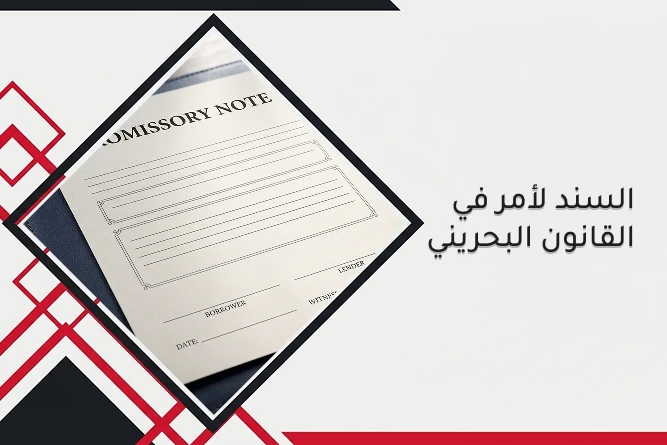
Article (442) of the Commercial Law identifies the essential particulars that a promissory note must contain, including:
-
The expression “promissory note” or an equivalent order clause written in the body of the instrument and in the language used.
-
An unconditional undertaking to pay a specified sum of money.
-
The maturity date.
-
The place of payment.
-
The name of the person to whom payment is to be made or to whose order it is payable.
-
The date and place of issue.
-
The maker’s signature.
Article (443) regulates certain situations in which the legal effect of missing particulars may be determined by statutory rules. For example, where no maturity date is stated, the note is generally deemed payable at sight.
The instrument should therefore be reviewed carefully before signing. The amount, beneficiary’s name, and signature must be clear, and unnecessary blank spaces should be avoided to reduce the risk of disputes.
The maker of a promissory note is responsible for paying the amount due in accordance with the legal provisions governing the instrument.
Article (445) of the Commercial Law provides that the maker of a promissory note is liable in the same manner as the acceptor of a bill of exchange, subject to the nature of the promissory note.
The beneficiary is entitled to claim payment when the instrument becomes due. The note may also be transferred by endorsement where the applicable legal requirements are satisfied, allowing the rights under the instrument to pass to another holder.
The holder should retain the original note and related documents and properly record any partial payment or agreement to defer payment to avoid disputes over the outstanding balance or maturity date.
If the maker fails to pay the amount due, the holder may take legal action to recover the debt in accordance with the provisions governing promissory notes and the applicable judicial procedures.
Before initiating a claim, the holder should review the maturity date, the particulars of the note, any endorsements or guarantees, and the statutory time limits applicable to the claim.
These deadlines are particularly important because the Commercial Law establishes specific limitation periods for certain actions arising from commercial instruments. The applicable period may vary depending on the person against whom recourse is sought and the nature of the claim.
Proper preparation of the note, retention of the original instrument, and timely action upon maturity help reduce disputes and protect financial rights.